Tarot is an incredible tool that combines symbolism, history, and psychology, allowing us not only to glimpse into the future but also to gain a deeper understanding of ourselves and the world around us. If you’re just beginning your tarot journey, you’re about to embark on an exciting path filled with discovery, inspiration, and new insights.
Many beginners feel uncertain or even fearful about using tarot, thinking it might be too complicated or require special psychic abilities. In reality, anyone with genuine curiosity and a desire for self-exploration can begin working with tarot. The key is selecting the right deck and learning a few simple yet effective techniques to quickly see your first results and understand how tarot works.
In this article, you’ll learn the essentials of starting your tarot practice, including a step-by-step guide to choosing your first deck and some easy initial spreads. We’ll also debunk common myths and misconceptions that often hinder beginners from confidently moving forward.
Welcome to the world of tarot—a realm of powerful symbols, intuition, and personal growth!
A Brief History of Tarot
The origins of tarot cards are surrounded by myths and theories. The most widely accepted view is that tarot emerged in 15th-century Northern Italy, initially used for games. Later, the symbolism of tarot was reinterpreted, and the cards began to be used for divination and fortune-telling (you can explore this further in a dedicated article).
From its early days, tarot spread rapidly across Europe, especially gaining popularity in 18th-century France, becoming integrated into esoteric and mystical traditions. In the 19th and 20th centuries, the most famous and widely used decks were created, such as the Rider-Waite Tarot and the Thoth Tarot (more details in a separate article).
Modern tarot has significantly evolved from its early versions, offering an enormous variety of artistic styles and approaches. Today, hundreds of unique decks exist, each with its own personality and focus. Decks can be traditional, based on classic symbols, or uniquely designed by contemporary artists and tarot experts for specific audiences or purposes. Nowadays, tarot is used not only for divination but also for psychological analysis, personal growth, and even business consulting.
Structure of a Tarot Deck
A traditional tarot deck consists of 78 cards divided into two main groups: the Major and Minor Arcana.
Major Arcana (22 cards)
The Major Arcana represents significant life events, spiritual growth, and profound psychological processes influencing our destiny and personality. These cards carry potent symbolism and are typically considered essential in readings. For a deeper look into the Major Arcana, check out our dedicated article.
Minor Arcana (56 cards)
The Minor Arcana include four suits: Wands, Cups, Swords, and Pentacles. Each suit corresponds to a particular element and aspect of life:
- Wands – Fire, energy, activity.
- Cups – Water, emotions, feelings.
- Swords – Air, intellect, thoughts.
- Pentacles – Earth, material and practical matters.
The Minor Arcana cards typically reflect everyday situations and complement the broader picture provided by the Major Arcana. Learn more about the meanings of Minor Arcana in our dedicated article.
Choosing Your First Tarot Deck
Selecting your first tarot deck is an exciting and essential step. There are many decks available, generally falling into three main categories:
- Traditional decks (like Rider-Waite or Marseille Tarot) are excellent for learning due to their clear symbolism.
- Modern decks feature contemporary themes and imagery relatable to everyday life.
- Artistic decks are uniquely styled, created for specific purposes or audiences.
Popular beginner-friendly decks include Rider-Waite Tarot, Marseille Tarot, and Thoth Tarot, all of which offer clear structures and rich symbolism that facilitate learning.
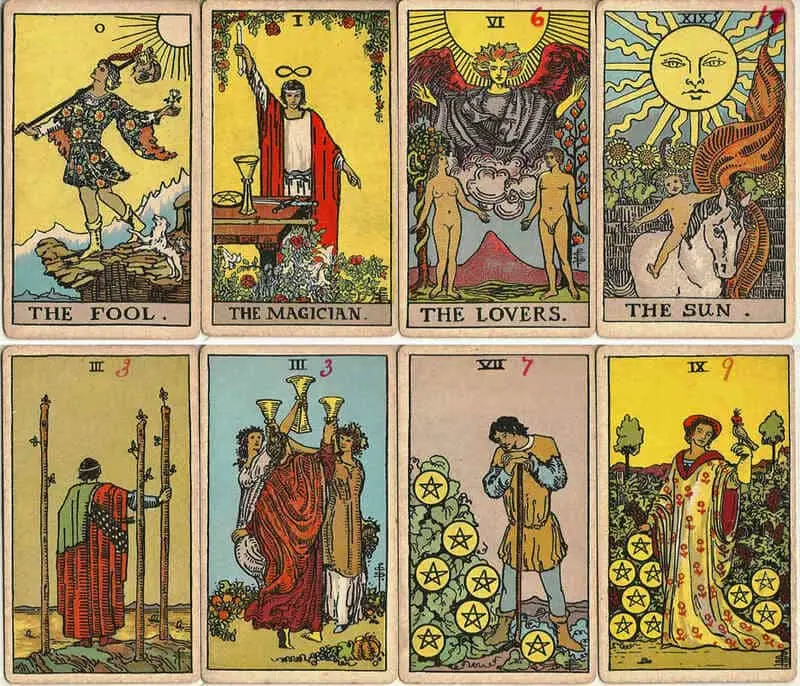
Pay attention to how you feel when looking at different decks. Your chosen deck should evoke a positive response and intrigue, inspiring regular use. More detailed advice on deck selection can be found in a separate article.
First Steps with Tarot
After purchasing your first deck, establish a connection and “get acquainted” with it. Start by looking through each card, noting details that draw your attention, and recording your impressions and thoughts.
Simple exercises can help you familiarize yourself with your deck, such as daily one-card pulls and reflecting on how that card manifests throughout your day. (Find more details about these exercises in a dedicated article.)
You can then proceed to basic spreads like the “Three-Card Spread,” helping you learn card relationships and contextual interpretations. Detailed instructions on basic spreads are available in another article.
Essential Tarot Spreads for Beginners
Start with simple yet effective spreads. Here are three popular beginner-friendly spreads:
- One-Card Spread: The simplest way to gain quick insight or clarity on a specific situation. Draw a single card and interpret it within your question’s context.
- Three-Card Spread: One of the most popular spreads, analyzing past, present, and future. Suitable for nearly all questions, from relationships to career prospects.
- Simplified Celtic Cross: A beginner-friendly version of the classic spread, gradually introducing more complexity. It provides comprehensive insights into a situation and reveals hidden influences.
Common Beginner Mistakes and How to Avoid Them
When starting with tarot, beginners often encounter typical pitfalls. Understanding these mistakes will help you master tarot interpretation more effectively and avoid unnecessary frustrations.
Interpretation Errors Many beginners take the meanings of cards too literally or attempt to memorize every interpretation. It’s important to develop an intuitive sense of the cards by focusing on their symbolism and trusting your instincts rather than relying solely on memorization.
Choosing the Wrong Deck Picking a tarot deck that’s too advanced or doesn’t resonate with you personally can hinder your learning process. Beginners are advised to start with popular decks such as Rider-Waite or Marseille Tarot, which feature clear symbolism that’s easier to understand.
Ethical Considerations in Tarot Beginners often overlook ethical guidelines when asking questions, sometimes posing overly personal or inappropriate queries. Remember, tarot should always be approached with respect for yourself and others. Ensure your questions are thoughtful, respectful, and considerate of personal boundaries.
Tarot for Personal Development
Tarot is more than a divination tool—it’s a powerful resource for personal growth and self-awareness. Regular tarot practice can significantly enhance your understanding of emotions, motivations, and life circumstances. Tarot helps illuminate inner conflicts, subconscious patterns, and guides you in making informed decisions.
Daily tarot exercises, such as asking, “What insight about myself do I need today?” encourage introspection, helping you better understand your inner self and highlight areas for personal development. Explore more about these practices in our article, “Using Tarot for Daily Self-Reflection.”
Additionally, tarot can be a valuable tool for goal setting and uncovering hidden resources. Specialized spreads can assist you in clarifying priorities and revealing potential paths toward achieving your objectives. Learn more about these spreads in our dedicated article, “Tarot Spreads for Clarifying Life Goals.”
Frequently Asked Questions for Beginners
Can I do tarot readings for myself?
Yes, you absolutely can and should do tarot readings for yourself, especially for personal growth and introspection. Approach self-readings objectively and remain open to the guidance provided.
How accurate are tarot predictions?
The accuracy of tarot readings depends on your experience, how clearly you phrase your questions, and your interpretive skills. Tarot highlights trends and potential scenarios rather than fixed, inevitable outcomes. For more details, refer to our article “How Accurate Are Tarot Predictions?”
Do I need special abilities to read tarot?
No special psychic abilities are necessary. Anyone with curiosity, patience, and consistent practice can learn and become proficient at tarot reading. Learn more about this in our article “Do You Need Psychic Abilities to Read Tarot?”
How often should I do tarot readings?
The frequency of tarot readings depends on your personal goals and comfort level. For everyday questions, a daily reading is sufficient. For deeper, more significant inquiries, readings can be spaced out further. More details can be found in our article “How Often Should You Do Tarot Readings?”
Conclusion
Remember, exploring tarot is a rewarding journey towards deeper self-understanding, clearer decision-making, and personal growth. Trust your intuition, keep practicing regularly, and you’ll soon see your readings becoming more accurate and insightful.
If you’re looking for personalized guidance, feel free to use our online tarot reading service. Experienced tarot readers are ready to provide you with detailed and thoughtful insights into your questions.